
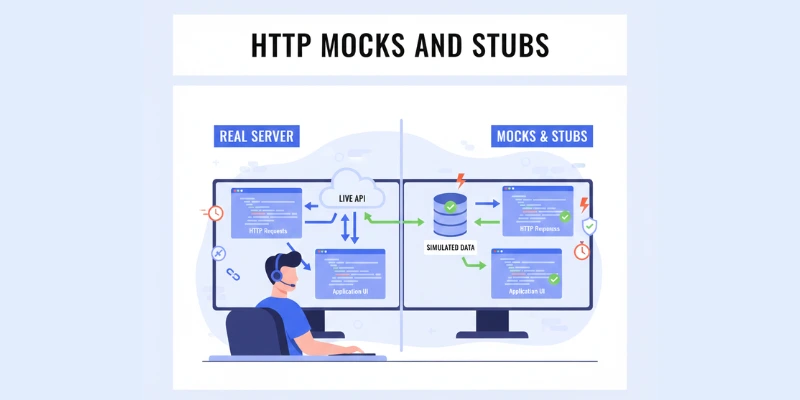
HTTP mocks and stubs are essential tools for creating reliable and predictable tests in modern software development. They help developers test applications without depending on real external services. For those looking to build a strong foundation in full stack development, enrolling in a Full Stack Developer Course in Trivandrum at FITA Academy can provide practical training and industry-relevant knowledge. By understanding how mocks and stubs work, teams can improve test stability, speed, and accuracy.
What are HTTP Mocks
HTTP mocks create simulated versions of real HTTP services. They pretend to be an actual server and return specific responses based on the requests your application sends. This helps developers test various scenarios without involving live APIs. A mock allows full control over the request and response flow.
It can imitate unique situations such as error responses, delayed answers, or unusual data patterns. These flexible simulations help teams verify how their applications react under different conditions. Mocks also remove the uncertainty that comes from relying on external systems.
What are HTTP Stubs
HTTP stubs offer another form of simulated service behavior. Stubs provide simple predefined responses for specific requests. They do not try to imitate complex server logic. Instead, they supply basic answers that match the minimum requirements of the test. For developers aiming to strengthen their skills, taking a Full Stack Developer Course in Kochi can provide hands-on experience with concepts like stubs and other testing techniques.
Stubs are useful when you need quick and consistent responses during development or automated tests. They reduce setup time and help developers focus on essential application logic. Stubs are often used in early testing phases because they are easy to configure and maintain.
Key Differences Between Mocks and Stubs
Mocks and stubs are related concepts, yet they serve different purposes. A mock focuses on verifying behavior. It checks how the application interacts with an external service. A stub focuses on supplying fixed data. It does not evaluate behavior and only returns the response you choose.
Mocks can simulate complex interaction patterns which makes them ideal for testing communication rules. Stubs work best for simple tests where the result matters more than the interaction details. For developers seeking to enhance their skills further, enrolling in a Full Stack Developer Course in Pune can provide practical exposure to concepts like mocks, stubs, and other essential testing techniques. Knowing when to use each tool improves test clarity and reduces unnecessary complexity.
Why Developers Use Mocks and Stubs
Mocks and stubs help developers create predictable and repeatable test environments. They isolate the application from real services and remove network dependencies. This leads to faster tests and fewer interruptions. When external services are slow, unstable, or unavailable, mocks and stubs keep the development process moving. They are also helpful during continuous integration because they create consistent test conditions. Teams can run large test suites without worrying about service outages or rate limits.
When to Choose Mocks or Stubs
A mock is the right option when you need to confirm how your application behaves during specific interactions. This includes checking request formats, validation rules, or service communication patterns. A stub works well when you only need sample data to proceed with testing. It is best for simple scenarios where the interaction details do not matter. Choosing the correct tool ensures better test design and easier maintenance.
Learning Beyond Technical Skills
While exploring tools for software testing, it is also important to keep learning and upgrading skills. For students and professionals looking to enhance their management knowledge, B Schools in Chennai offer excellent programs with practical exposure, industry connections, and opportunities to develop leadership skills. Combining technical expertise with management education can open new career paths and improve overall decision-making in projects.
Understanding HTTP mocks and stubs is an important part of building dependable software. They allow developers to work with confidence even when external systems are not available. By choosing the right approach for each test scenario, teams can improve software quality and reduce development delays.
Also check: How the Web Works: A Simple Explanation